- エドパック

- ピョコピョコ:Onomatopoeia
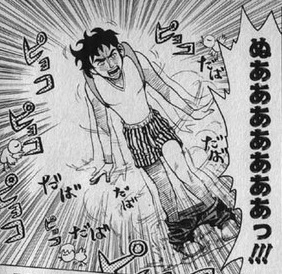
I found this picture online from the manga Sexy Commando Gaiden: Sugoi yo!! Masaru-san. The katakana used for "ピョコピョコ" conforms with the use for onomatopoeia as explained in Japanese textbooks. As one commentator explains, the manga character is embarrassed because his pants fell off, so he is shivering and hopping quickly in shame. "ピョコピョコ" represents the onomatopoeia for hopping or moving in short, quick steps.
I found it interesting that the author chose to use katakana for some sound effects and hiragana for others. Perhaps the author wished to distinguish the different sound effects more clearly by using different types of writings for each. I have not studied enough Japanese to feel a sharp change in nuance between hiragana and katakana sound effects, but I feel that the author must have intended a difference.
- マクドナルド ハンバーガー

Here's a more obvious sample. "マクドナルド" fits neatly in the textbook category of a foreign name (McDonald's), and "ハンバーガー" fits in the category of a foreign word (hamburger).

Hi!
ReplyDeleteI also think that the differences between katakana and hiragana is quite difficult.
For your sample of McDonalds, "マクドナルド" is the foreign name, so it is written in katakana. Also, "ハンバーガー" is came from the foreign word Hamburger, so it si also written in katakana.
The line between katakana and hiragana seems to be very controversial.
I'll search for it. Bye!!
Hey!
ReplyDeleteHow do you do?
Next week I have a book keeping test so I must study hard but the usual
school's study is ver hard so I am very tired now lol.
Do you have any test these days?
Do you study hard for it?
Take care for your health, bye
Masaki Miyamoto
ピーターさん、TAのすがです。こんにちは。
ReplyDeleteカタカナのぶんせき、おもしろいですね。
ドラフトのコメントに、どなたかがかいていましたが、エドパックは、日本のものではないとおもいます。ほかのアジアのくにのひとが、日本らしさをemphasize したくて、あえて、カタカナをつかって、日本のイメージをだしているのだとおもいます。
そういうカタカナのつかわれかたは、テキストにはのっていないでしょうね。
Miyamoto San, yes I had a big exam recently. I took an ethics exam for law students. I hope you're exams are going well. Good luck!
ReplyDeleteTA.S.さん、 コメントありがとうございました!
ReplyDelete